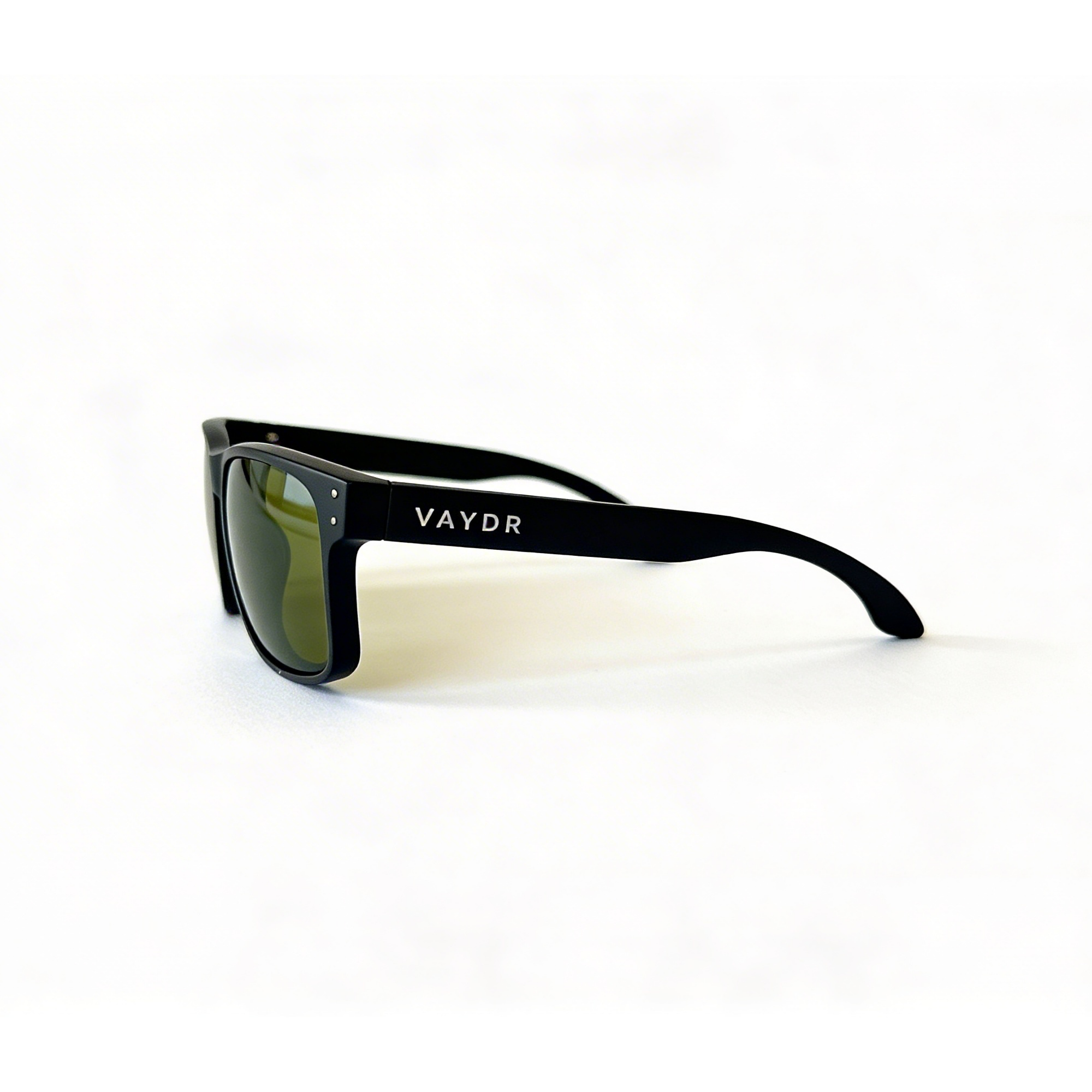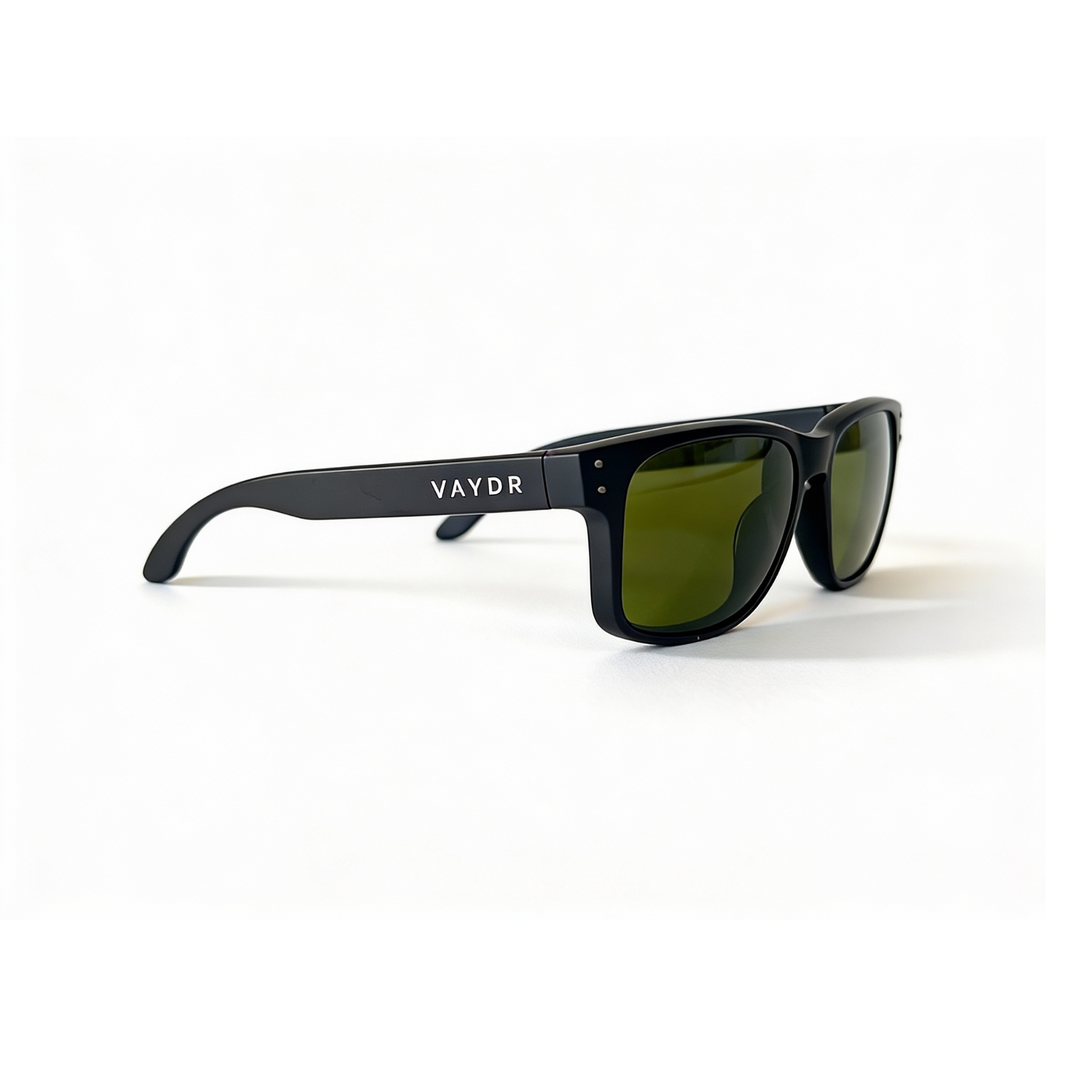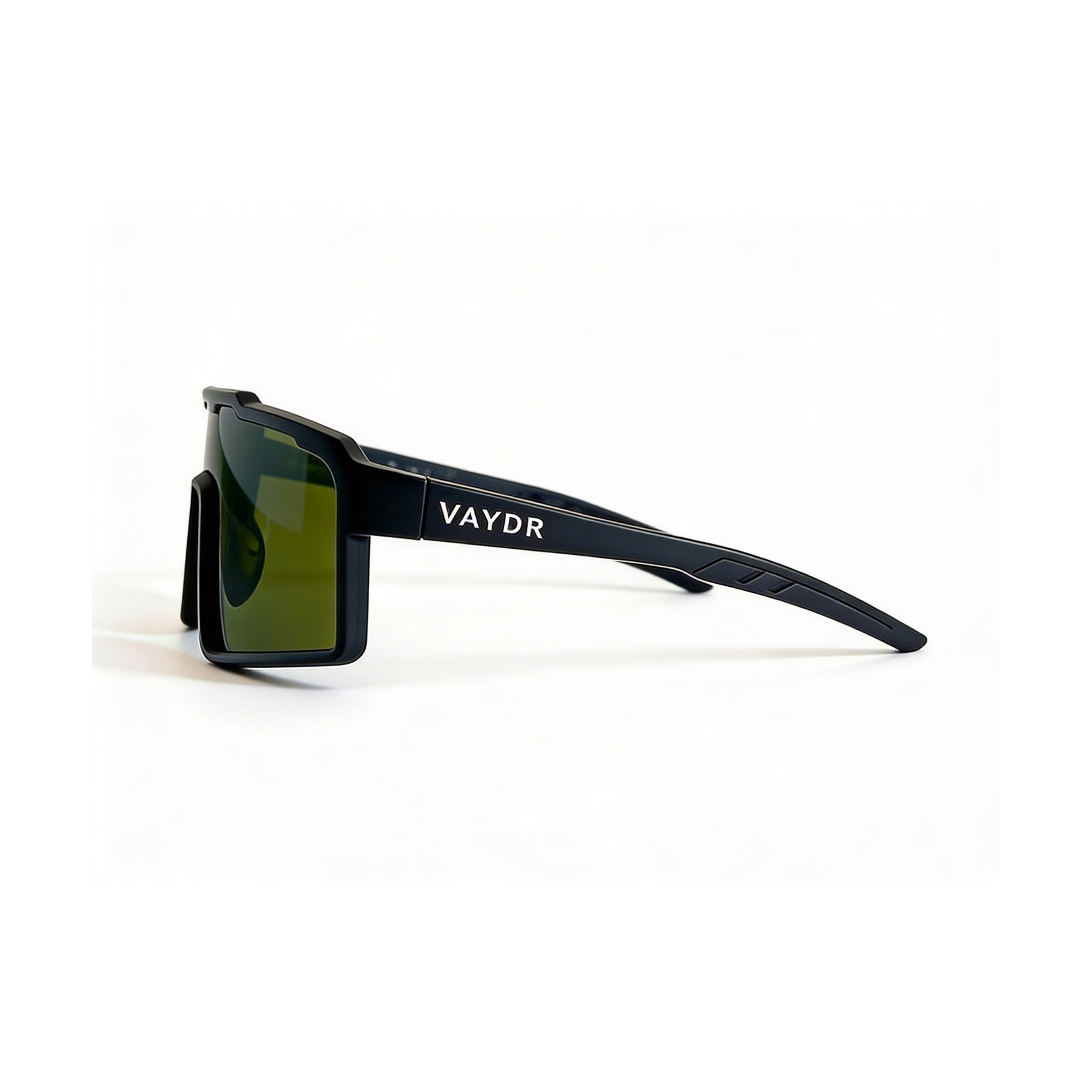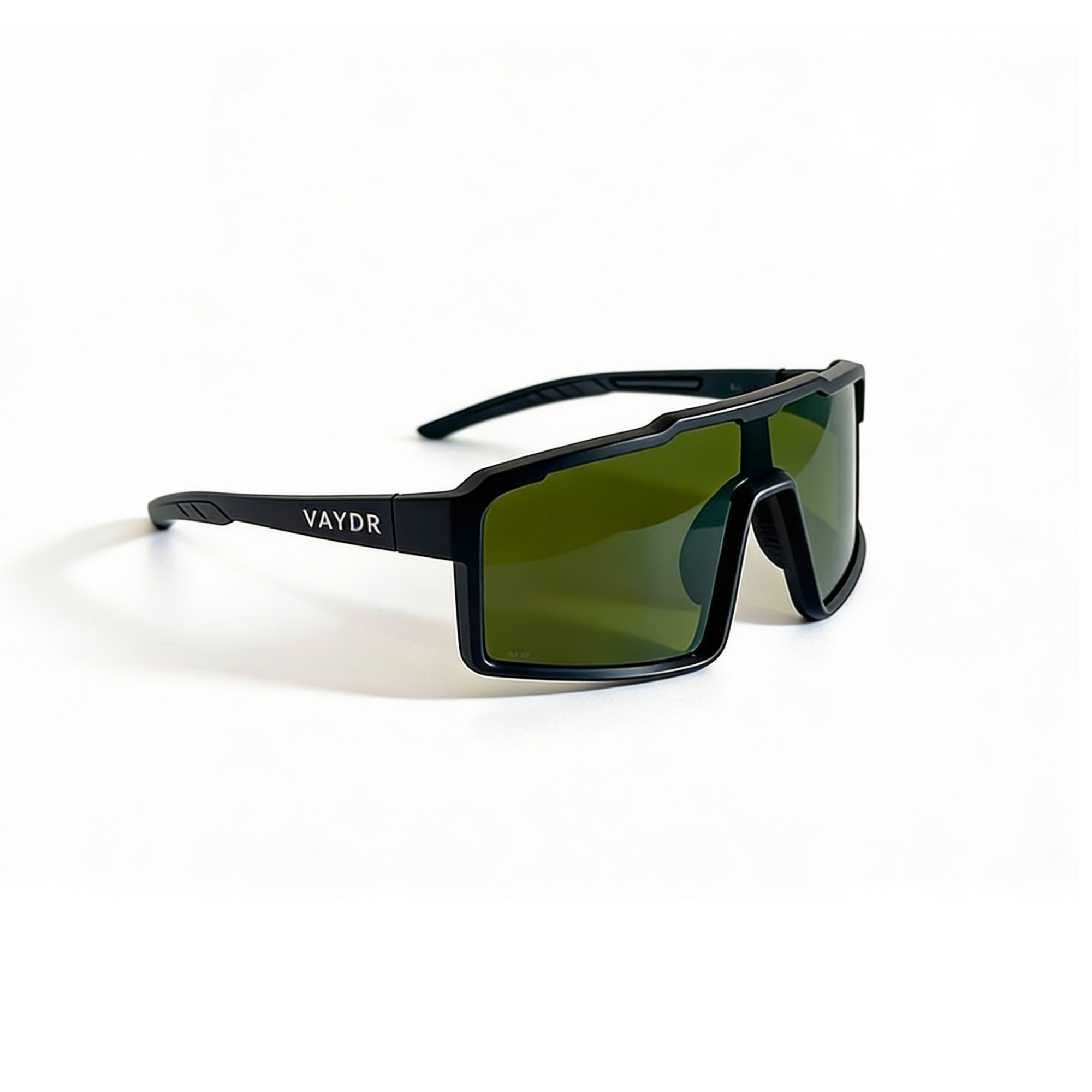
The GLX lens
How does a lens compare with makeup, masks or hats? Read our Journal guide: what works against facial recognition and what doesn't.
How the GLX lens works
Many face-recognition and security cameras light a scene with near-infrared, a band just past what the eye can see. Ordinary sunglass lenses, polarized and mirrored ones included, turn largely transparent in that band, so an infrared camera can see the eye region through them.
GLX is a lens formulation that filters near-infrared as well as UV. Under an infrared camera the lens stays dark, and the eye region that recognition systems lean on most stays covered. In visible light it behaves like any dark, high-quality sunglass lens.
The filtering is in the lens material itself. There is no coating to scratch or wear off.
The numbers
Figures are lens averages. Vaydr eyewear is designed to reduce exposure; it cannot guarantee you will not be identified. Read the disclaimers
What an infrared camera sees
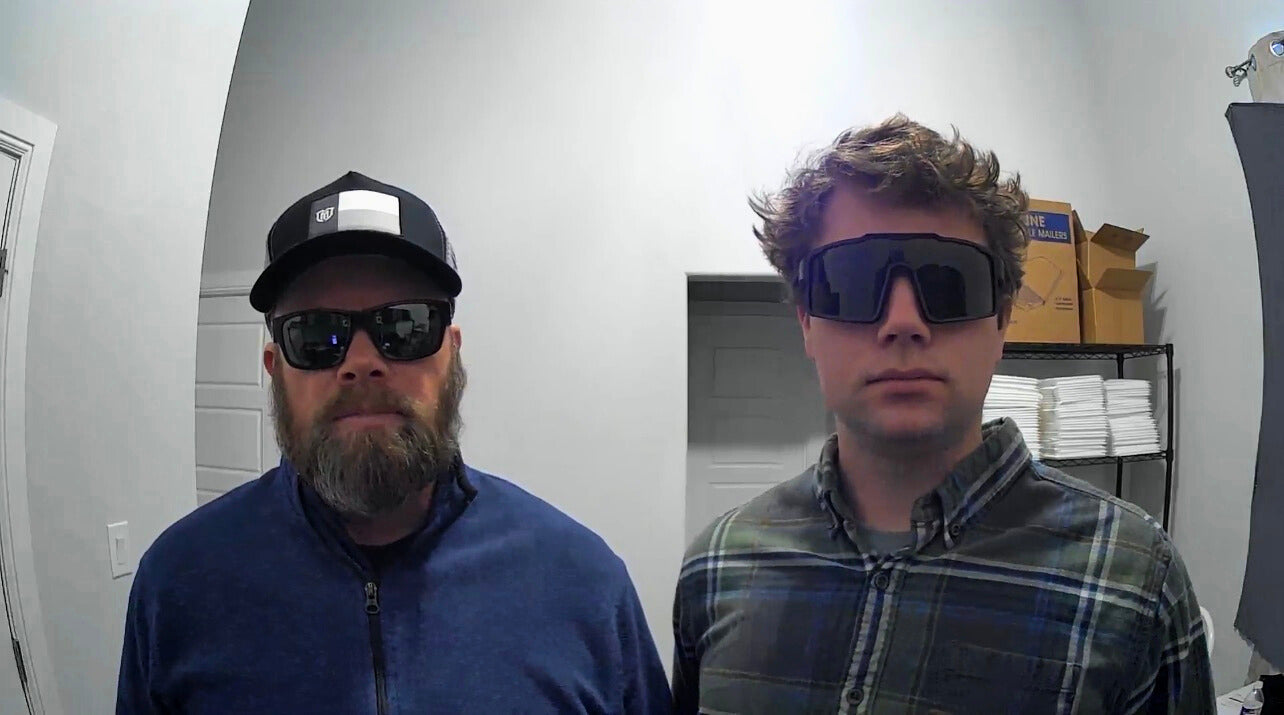
Normal Sunglasses
What You See

Vaydr Sunglasses
What Cameras See
What the lens does
Reduces the near-infrared light that IR-assisted cameras use to map a face.
What it doesn’t
Make you invisible. Results vary with the camera, the lighting and the angle. It makes the connection between a camera frame and your identity harder to draw.
Try it yourself
Put a pair on and try to unlock your phone with face unlock. Many phones will no longer recognize you, though results vary by device.